
Table of Contents↓
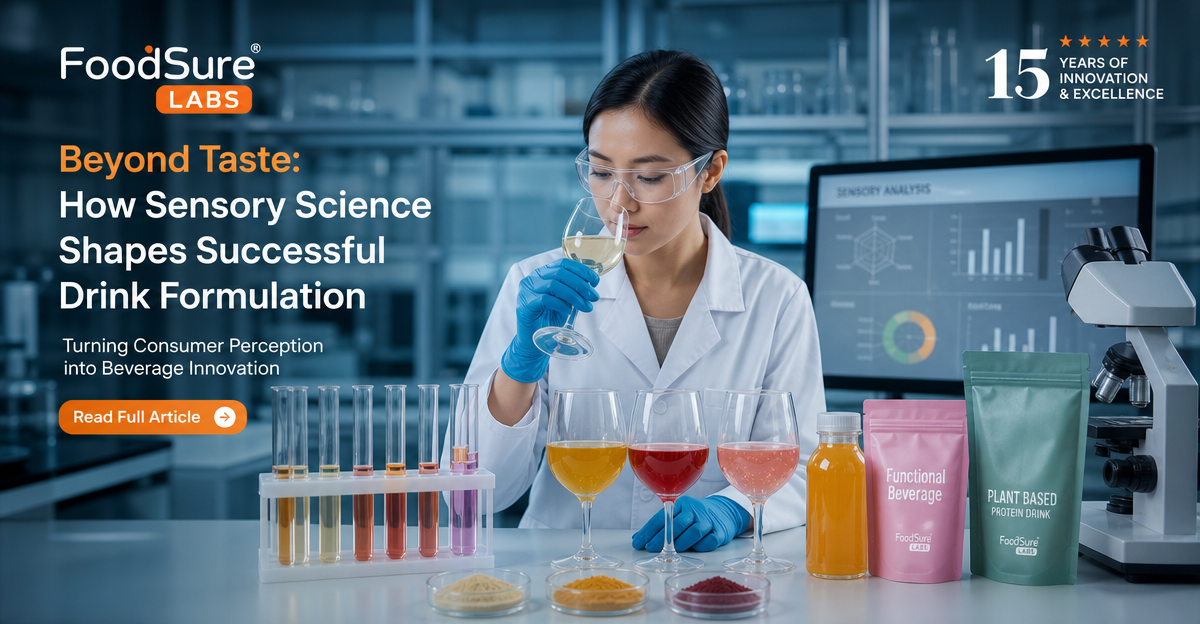
Beyond Taste: How Sensory Science Shapes Successful Drink Formulation
A beverage can meet its nutritional target, pass microbiological testing and run efficiently through production, yet still fail with consumers because the drinking experience is wrong. The sweetness may arrive too quickly, the acidity may feel sharp, the aroma may disappear after opening, or a functional ingredient may leave a dry, bitter finish. These problems are rarely solved by adding more flavour alone.
sensory science in drink formulation gives development teams a structured way to understand those reactions. It connects what people perceive with the formulation, processing and packaging decisions that create the final product. Rather than treating taste as a late-stage approval step, sensory work can guide decisions from the first bench prototype through pilot production and market validation.
This matters across soft drinks, functional beverages, sports and energy products, dairy and plant-based drinks, juices, ready-to-drink teas, waters, powdered beverages and alcoholic or alcohol-free formats. Each category creates a different sensory problem. A clear electrolyte drink must manage mineral notes without adding body or haze. A plant-based drink may need to mask cereal, legume or oil-derived notes while maintaining a credible natural profile. A reduced-sugar carbonated drink must replace not only sweetness, but also some of the weight and flavour-carrying effect supplied by sugar.
What sensory science adds to beverage development
Sensory science applies controlled methods to the way people detect, describe and judge a product. In a beverage project, it can examine appearance, aroma, flavour, sweetness, acidity, bitterness, texture, carbonation, aftertaste and overall liking. The work may involve trained assessors, internal panels, target consumers or a combination of groups.
The practical value lies in separating different questions. A trained panel may identify that a prototype has a pronounced green note, metallic aftertaste or weak fruit identity. A consumer study may show that the same prototype is still acceptable, or that the note is unacceptable only among a particular target group. Instrumental measurements can then support the sensory findings by examining pH, soluble solids, viscosity, carbonation, colour or volatile compounds.
Sensory data does not replace formulation expertise. It helps a team decide what to change and whether a change has improved the product. Without that structure, development often follows a cycle of personal opinions: one person asks for more flavour, another reduces acidity, and a third changes the sweetener. The result may move sideways rather than closer to a defined consumer preference.
The sensory architecture of a drink
A beverage is experienced in sequence. The package and liquid colour create an initial expectation. Aroma is released when the container is opened and again as the drink reaches the mouth. Sweetness, acidity, bitterness and flavour develop during consumption, while texture and temperature influence how those sensations are interpreted. The finish can determine whether the next sip is appealing or difficult.
Taste, aroma and flavour are related but different
Taste refers mainly to sensations detected through the taste system, including sweetness, sourness, bitterness, saltiness and umami. Aroma comes from volatile compounds detected through the nose, both before drinking and retronasally while the liquid is in the mouth. What people call flavour is the combined experience of these and other sensory inputs.
This distinction helps explain why a beverage can taste sweet but fail to taste like strawberry, peach or citrus. The sweetener may be working, while the aroma system is too weak, too artificial or poorly balanced with acidity. It also explains why a blocked nose reduces the perceived identity of many drinks even though basic taste remains.
In beverage flavor formulation, flavour dosage is only one variable. The base, pH, sweetener system, minerals, processing conditions and package can all affect release and perception. A flavour that performs well in water may become muted in a protein beverage, while a citrus note may become harsh in a highly acidic formula. Natural flavour systems can also vary in intensity and composition, so specifications and sensory benchmarks matter when raw-material supply changes.
Sweetness and acidity create balance
Sweetness is often discussed as a single target, but its timing and quality matter. Some sweeteners rise quickly and fade quickly. Others linger, create cooling sensations or introduce bitterness at higher use levels. Acidity affects perceived freshness, fruit character and thirst-quenching quality, but excessive acid can produce a sharp attack and an uncomfortable finish.
Reducing sugar demonstrates why sensory work must examine the whole beverage. Removing sucrose changes sweetness, body, viscosity, flavour release and sometimes colour. Replacing its sweetness with a high-intensity sweetener may leave a thin mouthfeel or a lingering aftertaste. A more successful approach may combine sweeteners, acids, flavours, soluble solids and texture modifiers, then evaluate the complete drinking experience rather than sweetness in isolation.
Buffering also matters. Two beverages with a similar pH can taste different if their titratable acidity and buffering systems differ. One may have a softer sourness, while another produces a more immediate acidic impact. Formulation teams should therefore connect pH and acidity measurements with sensory descriptions instead of assuming that one laboratory value predicts the full experience.
Texture, carbonation and finish
beverage texture and mouthfeel include viscosity, lubricity, astringency, creaminess, coating, particulate perception and the speed at which the liquid clears from the mouth. In a clear drink, even slight haze or sediment may be perceived as a defect. In a smoothie or plant-based beverage, too little body can make the product seem diluted, while excessive viscosity can reduce drinkability.
Carbonation changes more than mouthfeel. It contributes prickliness, aroma release and perceived acidity. Carbon dioxide levels can be affected by temperature, filling conditions, package integrity and storage. A prototype evaluated in an open beaker will not represent a carbonated drink consumed from its intended package, so sensory protocols must reproduce the serving conditions as closely as practical.
Aftertaste deserves separate attention. Bitterness from botanical extracts, minerals, vitamins, proteins or sweeteners may be acceptable during the first sip but become more noticeable after several sips. A drink intended for repeated consumption should be assessed for fatigue, lingering notes and willingness to continue drinking, not just first impression.
Choosing the right sensory evaluation method
sensory evaluation in beverage development works best when the method matches the decision being made. A team deciding between two flavour systems needs a different test from a team measuring whether a finished product is likely to appeal to its target market.
| Development question | Useful approach | What it can show |
|---|---|---|
| Are prototypes different? | Discrimination testing | Whether assessors can detect a meaningful difference |
| What creates the difference? | Descriptive analysis | Intensity and type of sensory attributes |
| Which version is preferred? | Consumer preference or hedonic testing | Liking, preference and acceptance |
| What needs adjustment? | Just-about-right scales | Whether sweetness, acidity, flavour or body is too low or too high |
| Does the product remain acceptable? | Repeated sensory checks | Changes during storage or after processing |
Discrimination tests can be efficient when a reformulation is intended to remain close to an existing product. They may help determine whether a sweetener replacement, flavour change or processing adjustment creates a perceptible difference. They do not, on their own, reveal whether the difference is liked.
Descriptive analysis builds a vocabulary and intensity profile. Terms should be defined carefully. “Fresh,” “natural,” “thick” and “clean” can mean different things to different people, whereas a trained panel may distinguish citrus peel, cooked fruit, chalkiness, astringency or delayed sweetness more consistently.
Consumer methods answer a commercial question, but they require an appropriate sample. Age, usage occasion, category familiarity, dietary needs and target positioning can all affect responses. A general population sample may not represent consumers who regularly buy sports drinks, high-protein beverages or alcohol-free alternatives.
From sensory brief to formulation decisions
A useful sensory brief converts a broad ambition into measurable product characteristics. “Refreshing and premium” is not enough to guide a formulation. A more practical brief might describe moderate sweetness, immediate citrus aroma, low bitterness, crisp acidity, light body, rapid finish and a defined carbonation level.
The brief should also state the intended consumption context. A small functional shot, a drink consumed with food and a beverage sipped over several hours need not have the same intensity profile. Temperature, serving size, package format and expected drinking speed influence the experience.
During early formulation, teams can map the main variables rather than changing everything at once. For example, a prototype series may vary sweetener blend and acid level while holding flavour constant. Another series may compare flavour systems at a fixed sweetness and pH. This makes the sensory result easier to interpret and reduces the risk of attributing an improvement to the wrong ingredient.
Ingredients that support a health or nutrition claim can create additional sensory work. Minerals may introduce saltiness or metallic notes. Plant extracts can bring bitterness and astringency. Proteins may create chalkiness or sedimentation. Fibres can change viscosity and mouth-coating. Vitamins may affect flavour stability or colour. The solution may involve dosage, encapsulation, masking, flavour design, processing or a change in the delivery format.
For teams exploring how to formulate a functional drink, sensory targets should be defined alongside active-ingredient targets. A beverage that reaches its fortification level but is difficult to consume repeatedly may not meet its commercial purpose. Palatability, serving size and frequency of use belong in the same development conversation.
Consumer testing without losing technical discipline
consumer testing for beverages should be designed around a clear decision. Testing too early can produce reactions to an unfinished product that are difficult to interpret. Testing too late may reveal problems when packaging, claims or manufacturing decisions are already fixed.
Consumer studies can measure overall liking, purchase interest, perceived intensity, preference between prototypes and suitability for a stated occasion. Just-about-right questions are useful for finding directional problems. If many consumers say acidity is too high, the next formulation round has a clear starting point. The data still needs to be read alongside liking because an attribute can be judged intense yet remain desirable for the category.
Serving control is important. Samples should be presented at an appropriate temperature, in a suitable coded container and in an order that reduces bias. Carbonation, sediment and aroma can change during handling. A test that ignores those conditions may measure the test procedure rather than the product.
Qualitative discussion can add context, especially when consumers reject a product for reasons the questionnaire did not anticipate. However, comments such as “too artificial” or “not refreshing” need interpretation. They may reflect aroma, sweetness, colour expectation, aftertaste or a mismatch between the product promise and the drinking experience.
Keeping sensory performance intact through processing and shelf life
A formulation approved at bench scale is not automatically a finished beverage. Heat, oxygen, shear, holding time, filling conditions and storage can alter the sensory profile. Thermal treatment may reduce fresh top notes or create cooked characteristics. Oxygen can damage delicate flavours and colours. Minerals and proteins may interact, causing haze, sediment or changes in mouthfeel.
Processing choices must be assessed with the sensory target in view. Hot filling, retort, pasteurisation, UHT and aseptic processing create different thermal histories. A carbonated product has separate requirements for gas retention and package performance. Powdered drinks introduce dissolution, wetting and clumping concerns before the consumer even tastes the product.
beverage stability testing should combine microbiological, chemical, physical and sensory observations. A product may remain safe while its aroma fades or its aftertaste worsens. Conversely, a visible change may be acceptable in one category but unacceptable in another. Samples should be assessed in the intended package and under relevant storage and distribution conditions, including the effect of temperature variation where appropriate.
Scale-up can expose issues that are invisible in a small vessel. Mixing energy, order of addition, hydration time and heat transfer may change dispersion or flavour distribution. A stabiliser can perform differently when commercial shear is applied. A flavour may be lost through processing or absorbed by packaging. Pilot trials should therefore include sensory checkpoints, not only yield and equipment measurements.
Designing for international markets
A beverage intended for several regions needs a sensory strategy as well as a regulatory and supply-chain strategy. A common base formulation may be practical when the product category, sweetness profile, ingredient permissions, package and manufacturing route are broadly compatible. Localisation becomes more relevant when taste expectations, permitted ingredients, claims, halal requirements, fortification rules, labelling or raw-material availability differ.
The same product promise may also be expressed differently by market. A lightly sweetened drink may be appropriate in one region but require a different sweetness balance elsewhere. Flavour names and expectations do not always map directly across languages and cultures. A botanical note that signals sophistication to one audience may be read as medicinal by another.
Localisation does not always require a completely separate formula. Teams can sometimes retain a common base and adjust flavour intensity, sweetener ratio, acidity, colour or pack size. That approach can reduce manufacturing complexity, but only if the variants remain distinguishable, stable and economically manageable. The decision should account for minimum production volumes, ingredient procurement, line changeovers, artwork, inventory and quality control.
Regulatory requirements vary by market and should be checked before launch. This applies to ingredient permissions, nutrition declarations, allergen information, functional claims, additives, flavour descriptions and certification expectations. A sensory preference cannot justify an ingredient or claim that is unsuitable for the intended jurisdiction.
Turning sensory findings into a stronger development process
The most useful sensory programme is connected to the wider drink product development workflow. Product requirements, ingredient selection, prototype design, analytical testing, consumer research, process development and cost modelling should inform one another.
Teams can improve decision quality by recording:
- the sensory target and intended consumption occasion;
- the attributes that define acceptance or rejection;
- the formulation variables changed between prototypes;
- the test method, serving conditions and participant profile;
- the sensory, analytical and manufacturing results together;
- the changes that must be confirmed at pilot and commercial scale.
This record prevents a common problem: optimising a prototype for one attribute while weakening the complete product. A flavour may score higher in intensity but lower in overall liking. A thinner drink may reduce calories but lose the body associated with the category. A new natural ingredient may improve the label story while creating bitterness that requires more masking.
For businesses moving from concept to manufacture, specialist support can be useful when the sensory issue is linked to ingredient interactions, processing, stability, claims or scale-up. Foodsure can support beverage formulation, sensory planning, product optimisation and commercialisation decisions where a product needs to perform consistently beyond the laboratory bench.
Conclusion
Sensory science gives beverage teams a practical method for translating perception into product decisions. It shows whether a problem comes from sweetness quality, acidity, aroma release, texture, carbonation, aftertaste or the interaction between several of these factors. It also helps distinguish a technical improvement from a commercially meaningful one.
The strongest formulations are built with sensory targets that remain connected to ingredients, processing, packaging, shelf life, cost and market requirements. When those relationships are tested early and revisited during scale-up, teams have a better chance of producing a drink that is not merely compliant or technically stable, but enjoyable enough to earn repeat consumption across its intended markets.
Frequently Asked Questions
What is sensory science in drink formulation?
sensory science in drink formulation uses structured methods to understand how people perceive a beverage’s appearance, aroma, taste, texture and overall appeal. The findings help developers adjust ingredients and processes rather than relying only on individual opinions.
Why is sensory testing important for beverage development?
Sensory testing helps teams identify preferences, detect unwanted notes, compare prototypes and assess whether processing or storage has changed the product. It can reduce development risk by identifying acceptance problems before commercial launch.
Which sensory attributes matter most in a beverage?
The relevant attributes depend on the category, but commonly include aroma, sweetness, acidity, bitterness, flavour intensity, mouthfeel, carbonation, aftertaste, colour and visual appearance. Their balance usually matters more than any single attribute in isolation.
How do beverage developers measure consumer preferences?
Developers may use hedonic ratings, preference tests, just-about-right scales, descriptive methods and controlled consumer studies. The method should match the decision, such as choosing between prototypes or diagnosing why a product is not well liked.
How does sensory science support healthier drink formulations?
It helps teams balance sugar, sodium, acids, sweeteners, flavours and functional ingredients while monitoring taste, texture and satisfaction. This is particularly useful when reducing sugar or adding ingredients that introduce bitterness, mineral notes or astringency.
What is the difference between sensory evaluation and consumer testing?
Sensory evaluation is the broader field and can include trained descriptive panels, discrimination tests and consumer studies. Consumer testing focuses on how the intended market perceives, likes or prefers a beverage.
Can sensory testing predict commercial success?
It can improve decision-making and reveal likely acceptance, but it cannot guarantee sales. Commercial performance also depends on positioning, price, packaging, availability, claims, distribution and the fit between the product and its consumption occasion.
When should sensory testing begin in beverage development?
It should begin once the team has a clear product concept and meaningful prototypes, then continue at important formulation, processing and shelf-life stages. Early testing can guide direction, while later testing confirms that the commercial product still meets its sensory target.
How can sugar reduction affect beverage sensory quality?
Sugar reduction can lower sweetness and also reduce body, viscosity and flavour-carrying capacity. A suitable replacement may require a combination of sweeteners, acids, flavours and texture adjustments rather than a one-for-one sweetness substitution.
Why can a beverage taste different after scale-up?
Commercial mixing, heat transfer, holding time, shear, oxygen exposure, filling and packaging may differ from laboratory conditions. These changes can affect flavour release, dispersion, carbonation, colour, mouthfeel and stability, so sensory checks should be included during pilot and production trials.