
Table of Contents↓
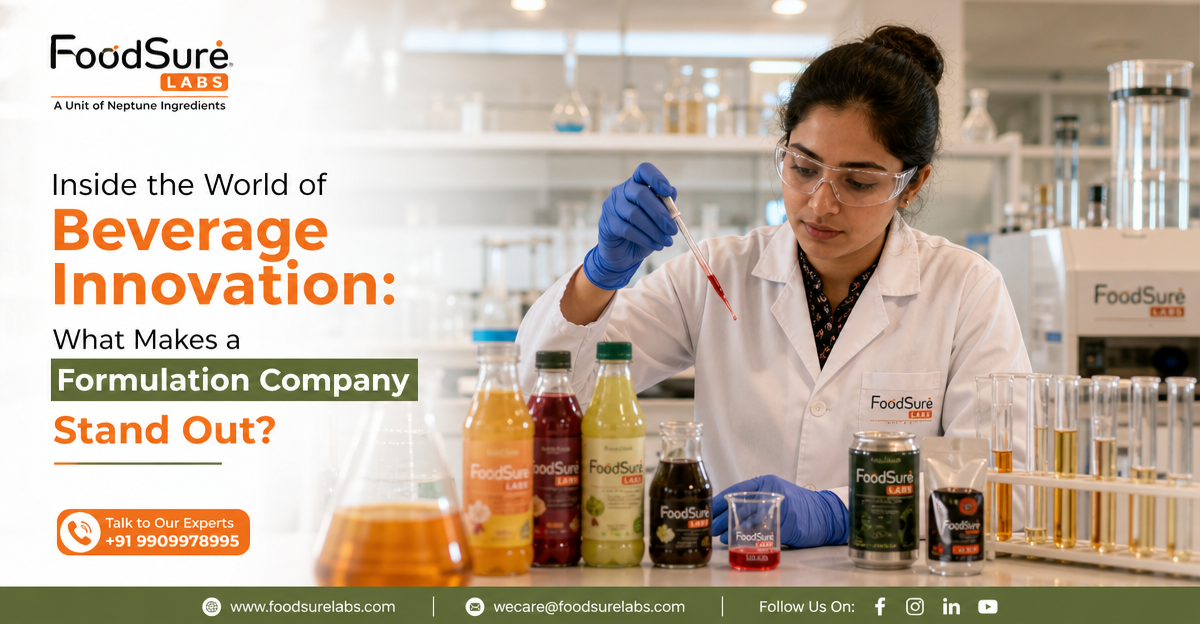
Inside the World of Beverage Innovation: What Makes a Formulation Company Stand Out?
A promising beverage concept can fail long before it reaches a retail shelf. The flavour may lose definition after processing, a botanical extract may sediment, a protein system may become gritty, or a reduced-sugar recipe may taste thin despite having the correct sweetness level. A laboratory sample can also perform well in a small beaker and behave very differently in a pilot plant or commercial filling line.
These challenges explain why choosing a beverage formulation company is more significant than selecting a supplier to create a recipe. The right partner connects ingredient science, sensory design, processing, packaging, compliance, cost and manufacturing from the beginning. That connection helps a brand develop a drink that is not only appealing in a tasting session, but also stable, legally supportable, repeatable and commercially realistic.
For businesses operating across international markets, the brief is more demanding. A common base formula may work across several regions, but sweetness preferences, permitted ingredients, label conventions, packaging formats, climate conditions and manufacturing availability can differ. A capable development partner knows which variables require localisation and which can remain standardised.
What a beverage formulation company actually contributes
A beverage formulation company develops and refines drink recipes around defined commercial and technical requirements. Those requirements may include target nutrition, flavour profile, pH, texture, shelf life, processing method, pack format, ingredient declaration, cost per unit and intended market.
The work normally begins with a product brief rather than a list of ingredients. A useful brief describes the consumer occasion, positioning, serving format, claims under consideration, target price, production volume and markets of interest. It also identifies restrictions such as allergen avoidance, halal suitability, vegan positioning, caffeine limits, natural colour preferences or the need for a short ingredient list.
From there, the development team may assess:
- Base ingredients, sweeteners, acids, flavours, colours and functional actives
- Solubility, dispersion, sedimentation and interaction between ingredients
- pH, buffering capacity and microbiological risk
- Thermal treatment, carbonation, aseptic filling, hot filling or other processing needs
- Flavour release, sweetness perception, mouthfeel and aftertaste
- Packaging compatibility and expected distribution conditions
- Ingredient availability, minimum order quantities and cost implications
- Regulatory and labelling considerations for intended markets
The objective is not simply to produce a drink that tastes good on the day it is made. It is to create a specification that can be manufactured consistently and still deliver the intended experience throughout its shelf life.
Where beverage innovation becomes practical
Beverage innovation is often associated with unusual flavours or new ingredients, but commercial innovation is broader than novelty. It may involve improving a familiar format, removing sugar without losing body, adding a functional benefit, changing the serving occasion or making a product easier to manufacture and distribute.
A development partner should be able to distinguish a genuine product opportunity from an ingredient trend that does not suit the brief. For example, an active ingredient may look attractive from a marketing perspective but create bitterness, haze, precipitation or a poor label declaration. The technical question is not only whether the ingredient can be added. It is whether it can be delivered at a meaningful level, remain stable, fit the processing conditions and support a pleasant drinking experience.
The same principle applies to new flavour combinations. A flavour can perform well in a bench sample but lose impact after pasteurisation, interact with minerals or become unbalanced when the formula is carbonated. A strong formulation team tests the product under the conditions it will face commercially, rather than treating the initial prototype as the finished answer.
The technical disciplines behind strong beverage development
Ingredient knowledge and system design
Ingredients rarely behave independently in a beverage. Acids affect flavour perception and preservation conditions. Minerals can react with proteins, gums or polyphenols. Sweeteners differ in onset, intensity, duration and aftertaste. Plant extracts may vary between batches, while natural colours can be sensitive to pH, light or heat.
This is why custom beverage formulation involves more than substituting one ingredient for another. If sucrose is reduced, replacing its sweetness does not automatically replace its contribution to body, viscosity, flavour release and balance. A successful reformulation may need changes to the acid system, flavour concentration, bulking ingredients and mouthfeel structure.
Functional products create additional complexity. Electrolytes, vitamins, minerals, amino acids, botanicals and other actives may introduce bitterness, haze or sediment. Their dosage, form, particle size, solubility and compatibility with the base beverage all matter. In some products, the desired functional positioning may need to be balanced against the maximum level that remains sensorially acceptable.
Sensory development rather than flavour selection alone
Flavour development is not limited to choosing a flavour house concentrate. The final perception depends on sweetness, acidity, aroma release, temperature, carbonation, viscosity and serving format. A citrus profile in a still drink may need a different balance from the same profile in a carbonated beverage. A botanical note may be attractive at low intensity but become medicinal when combined with a mineral system.
A structured sensory process can compare prototypes against the product brief and identify the source of a weakness. “Too thin” may indicate a body problem, but it may also reflect excessive acidity or a flavour system with insufficient mid-palate presence. “Too sweet” may relate to sweetness duration rather than total intensity. Good sensory work turns these observations into formulation decisions.
For a brand considering drink formulation services, the useful question is how sensory feedback is converted into controlled changes. A partner should be able to explain what is being adjusted, why it is being adjusted and how the change affects cost, processing and label requirements.
Processing and stability
Processing is part of formulation, not a separate activity at the end of development. A recipe intended for hot fill has different constraints from one intended for cold fill, aseptic processing, retort treatment or carbonation. Heat can reduce aroma intensity, alter colour and affect sensitive actives. Oxygen exposure can contribute to flavour deterioration or colour change. Filling conditions can influence foaming, dissolved gas and pack performance.
Physical stability also needs to be defined clearly. A clear beverage may require complete absence of visible particles, while a juice-style product may accept controlled pulp or cloud. A protein drink may naturally have some opacity, but it still needs to avoid unacceptable separation, clumping or sediment during storage.
Stability testing should reflect the proposed formula, pack, process and distribution conditions. Testing only the liquid in a laboratory container may not reveal interactions with the final package or changes caused by commercial heat treatment. A development programme should establish what is being monitored, such as pH, appearance, flavour, viscosity, carbonation, sediment, microbiological status or active content where relevant.
What separates a capable partner from a recipe supplier?
The strongest beverage formulation company candidates usually demonstrate connected capabilities rather than one isolated service. They can discuss formulation choices in relation to manufacturing, explain likely failure points and identify the information needed before development begins.
Several indicators are particularly useful when evaluating a partner.
They begin with commercial constraints
A technically impressive formula may still be unsuitable if its ingredients are difficult to source, require an expensive process or cannot meet the target cost. Ingredient selection should take account of supply continuity, regional availability, minimum order quantities, lead times and price volatility.
Commercial constraints do not mean every product must use the cheapest available ingredient. They mean the trade-offs should be understood early. A premium botanical, specialised stabiliser or natural colour may be justified by the positioning, but the impact on gross margin and supply planning should be visible before launch decisions are made.
They understand regulatory variation
Regulatory requirements vary by market and should be checked before commercial launch. Ingredient permissions, nutrition declarations, claims, allergen statements, additive rules and language requirements may differ between jurisdictions. Products positioned around energy, immunity, hydration, sports performance or other benefits can receive additional scrutiny because the wording on pack needs to match the evidence and applicable rules.
A global strategy does not always require a separate formula for each market. A common base can be practical when the ingredient system, sensory profile and label requirements are compatible. Localisation may still be needed for flavour intensity, sweetness, fortification level, claims, pack size or language. The earlier these decisions are mapped, the less likely the brand is to discover late-stage reformulation requirements.
Halal suitability may also matter for products intended for relevant markets, but the assessment should cover the complete ingredient and processing chain rather than a single headline ingredient. Certification, documentation and supplier status should be reviewed according to the intended market and customer requirements.
They connect bench work with manufacturing
Bevarage R&D is valuable only when the output can move towards production. A partner with practical beverage manufacturing expertise can consider mixing order, hydration time, shear, tank capacity, heat exposure, filtration, carbonation, filling speed and cleaning requirements while the formula is still being developed.
Scale changes the physical conditions of the process. A powder that disperses quickly in a small vessel may form lumps in a larger tank. A flavour that appears balanced in a 250-millilitre sample may be less consistent when dosing, mixing and holding times increase. Foam, heat transfer and residence time can all affect the final product.
Commercial readiness therefore depends on more than a formula sheet. It may require a manufacturing specification, process instructions, ingredient standards, quality checks, packaging requirements and defined acceptance criteria. A partner supporting pilot production can help identify whether the product is ready for a contract manufacturer or whether more optimisation is needed.
Functional products require tighter integration
Functional beverage development brings together product positioning, dose, sensory quality, stability and regulatory review. The active ingredient needs to be present at a meaningful level, but it must also remain compatible with the beverage matrix and intended shelf life.
Some actives are sensitive to light, oxygen, heat or pH. Others contribute bitterness, astringency or a noticeable colour. Encapsulation, flavour masking, emulsification, buffering or a change in processing may help, but each solution can affect cost, label length and manufacturing requirements.
Hydration products, sports drinks and nutraceutical formats illustrate the need for a complete system approach. Electrolyte levels influence taste and osmolarity. Vitamins and minerals may affect clarity or stability. Botanical ingredients can vary in flavour and composition. A product developed for one serving size may need a different balance if the pack format, usage occasion or market expectation changes.
For brands exploring nutraceutical beverage development or sports drink formulation, the development brief should define both the functional purpose and the sensory threshold. A formula that delivers a high level of an active but is difficult to drink may not perform commercially as intended.
How the development process should move from concept to production
A clear beverage product development programme normally moves through connected stages, although the order may vary according to product type.
- Brief and feasibility: Define the product promise, target consumer, format, markets, claims, cost, process and expected volume. Identify ingredients or requirements that may create early risk.
- Concept and prototype design: Select a suitable base, build initial flavour and functional systems, and create samples that answer the main technical questions.
- Sensory and technical screening: Compare prototypes for taste, aroma, mouthfeel, appearance, aftertaste and stability indicators. Remove options that cannot meet the brief.
- Optimisation: Refine the formula around ingredient dosage, pH, sweetness, texture, processing and cost. At this stage, trade-offs should be documented rather than hidden.
- Verification: Conduct appropriate stability, packaging, microbiological, analytical and sensory testing. The test plan should reflect the final process and pack as closely as possible.
- Pilot and scale-up: Produce the beverage under representative manufacturing conditions. Review mixing, heating, filling, yield, losses, foaming and finished-product consistency.
- Production handover: Finalise specifications, process parameters, quality checks and documentation required by the manufacturing partner.
This beverage product development process reduces the risk of treating formulation, compliance and manufacturing as separate handovers. It also creates decision points where a project can be adjusted before larger costs are committed.
Global markets: standardise the platform, localise the right variables
A beverage intended for international distribution benefits from a platform strategy. The brand may establish a core base, flavour architecture and manufacturing method, then decide which elements can be adapted by market.
Standardisation can simplify procurement, quality control and production planning. It may also make brand taste more consistent. However, excessive standardisation can create problems if the formula relies on an ingredient with limited regional availability, if local labels require different declarations or if the sweetness and flavour profile do not suit the target audience.
Localisation may involve:
- Sweetness and acidity balance
- Flavour intensity or preferred flavour direction
- Fortification and claim strategy
- Ingredient or additive selection
- Language and label presentation
- Pack size, closure and material choice
- Process settings for local manufacturing equipment
Climate and distribution also matter. Heat exposure during storage or transport can place greater pressure on colour, flavour, emulsions, carbonation and packaging. A shelf-life plan should reflect the expected route to market rather than relying only on ideal warehouse conditions.
Awareness of beverage industry trends can help identify opportunities, but trend language should not replace product reasoning. Lower sugar, natural positioning, functional benefits, recyclable packaging and unusual flavour combinations all require technical choices. The most commercially useful trend is one that can be translated into a stable, affordable and clearly positioned product.
Packaging and quality are part of the product
Packaging affects more than appearance. It influences oxygen and light exposure, carbonation retention, filling compatibility, transport performance and consumer use. A beverage may require a different pack barrier or closure depending on its sensitivity and distribution conditions.
Packaging decisions should be made alongside formulation rather than after it. A light-sensitive colour, carbonated product or oxygen-sensitive active can place specific demands on the pack. The interaction between liquid and packaging material should also be considered, particularly where aroma scalping, migration, corrosion or seal performance could become relevant.
Quality systems provide the operating framework for consistency. Specifications should define incoming ingredients, critical process conditions, finished-product checks and acceptable variation. Support in food and beverage quality control can be particularly valuable when a startup moves from small-batch production to a co-manufacturer or when the same product is made at more than one site.
Questions to ask before appointing a development partner
A procurement or innovation team can learn a great deal from the first technical discussion. Useful questions include:
- Can the partner explain how the proposed formula will be manufactured at the intended scale?
- What testing is recommended for the product type and pack format?
- How are ingredient availability and cost reviewed?
- Which parts of the formula may need market-specific adaptation?
- How will sensory decisions be recorded and evaluated?
- What documentation will be available for production handover?
- Can the partner coordinate with a co-packer or support pilot manufacture?
Responses should be specific to the product rather than limited to a catalogue of services. A partner does not need to promise that every issue will be solved immediately. It should be able to identify uncertainty, propose a sensible test and explain the commercial consequence of each route.
For a business that needs support across concept design, prototyping, testing, optimisation and scale-up, Foodsure can provide a practical route into professional beverage R&D and custom beverage formulation. The appropriate scope depends on the product category, target markets, manufacturing route and stage of development.
Conclusion
A standout beverage formulation company does more than create an appealing sample. It connects sensory quality with ingredient behaviour, processing, packaging, compliance, cost and scale. That connection becomes particularly important when a product includes functional ingredients, reduced sugar, sensitive flavours or a target market spread across different regulatory and manufacturing environments.
The most reliable development path begins with a clear brief, tests the main technical risks early and treats pilot production as a meaningful stage rather than a formality. When formulation decisions are made with commercial manufacturing in view, brands have a stronger chance of producing a drink that remains consistent from prototype to finished pack.
Frequently Asked Questions
What does a beverage formulation company do?
A beverage formulation company develops and refines drink recipes to meet goals for flavour, nutrition, stability, shelf life, regulatory compliance, scalability and production cost. It may also support ingredient selection, sensory testing, pilot trials and manufacturing handover.
What makes a beverage formulation company stand out?
A strong partner combines scientific expertise, sensory testing, ingredient knowledge, regulatory awareness, prototype development and manufacturing understanding. The ability to explain scale-up risks and make a formula commercially practical is as important as creating a good first sample.
How does beverage innovation influence product development?
Beverage innovation influences product development by turning market opportunities into workable products. Lower sugar, functional ingredients, sustainable packaging and new flavour experiences each create formulation, processing, labelling or cost decisions that need to be assessed together.
How long does beverage formulation typically take?
The timeline varies with product complexity, ingredients, testing requirements and production needs. A straightforward beverage may take several weeks, while a highly functional, sensitive or regulated product can require several months.
Can a formulation company help take a beverage from concept to production?
Yes. Many companies support concept design, ingredient selection, prototype creation, sensory evaluation, stability testing, regulatory review, pilot production and manufacturing scale-up. The exact scope depends on the product and the capabilities required.
Why is scalability important in beverage formulation?
Scalability matters because a formula that works in a laboratory may behave differently in large-scale production. Mixing, heat transfer, holding time, filling and ingredient dosing can affect flavour, texture, stability, consistency and cost.
What is the difference between formulation and beverage manufacturing?
Formulation defines the ingredients and technical characteristics of the beverage, while manufacturing converts that specification into finished product. The two activities need to work together because a formula may require changes to mixing, heating, filling or packaging before it can be produced reliably.
Does every international market need a separate beverage formula?
No. A common base formulation may work across several markets when ingredients, sensory expectations, processing and labelling requirements are compatible. Local adjustments may still be needed for sweetness, flavour, claims, fortification, packaging or permitted ingredients.
What testing is commonly required before launching a new beverage?
Testing depends on the product, but may include sensory evaluation, pH and analytical checks, microbiological assessment, physical stability, packaging compatibility and shelf-life studies. The test plan should reflect the final formula, process and package.
When should a brand seek professional beverage R&D support?
A brand should consider professional support when it needs a new formulation, a difficult reformulation, functional ingredient integration, lower sugar, regulatory guidance, scale-up or manufacturing troubleshooting. Early input can reduce the risk of developing a recipe that cannot meet cost, stability or production requirements.