
Table of Contents↓
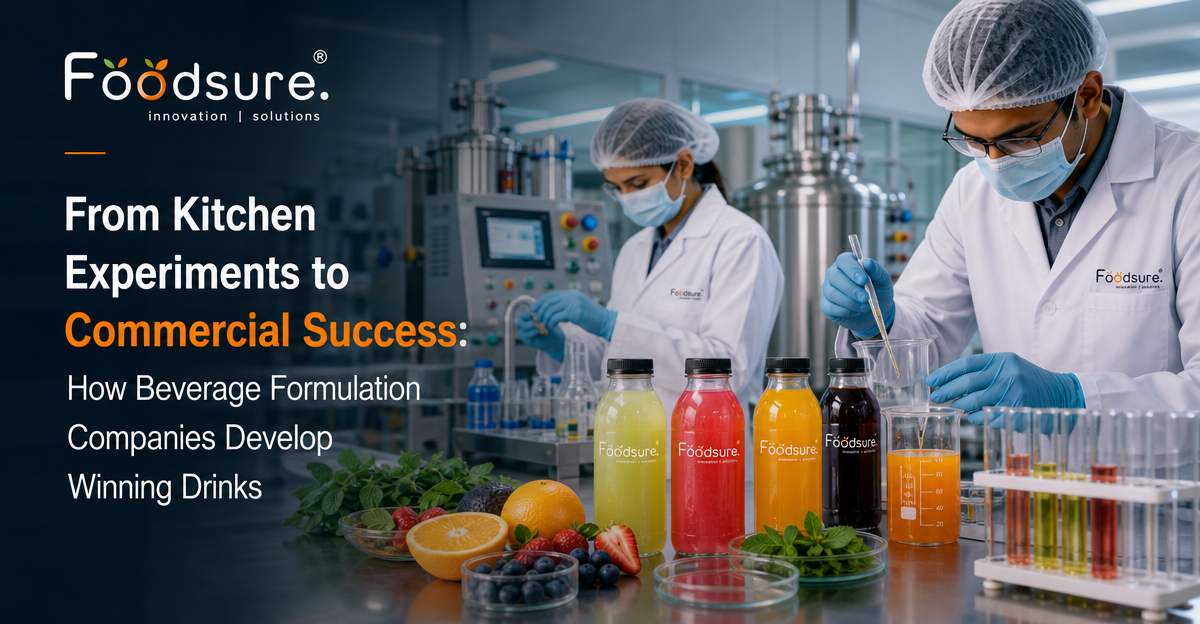
From Kitchen Experiments to Commercial Success: How Beverage Formulation Companies Develop Winning Drinks
A drink can taste excellent in a kitchen and still fail during commercial production. The recipe may depend on ingredients that are difficult to source consistently, separate after filling, lose flavour during heat treatment, or exceed the target cost once packaging and manufacturing are included. A successful beverage therefore requires more than an appealing flavour combination. It needs a formulation that remains stable, compliant, manufacturable and commercially relevant.
beverage formulation companies help bridge that gap. They translate an initial idea into a defined product specification, then work through ingredient selection, prototype development, sensory testing, shelf-life assessment, pilot production and scale-up. Their role can range from technical formulation to wider product development support, depending on the complexity of the drink and the capabilities of the brand.
This matters whether the product is a sparkling soft drink, juice-based beverage, energy drink, plant-based drink, electrolyte product, ready-to-drink coffee, wellness shot or fortified water. Each category brings different technical constraints. A clear drink may require complete solubility and low haze, while a functional beverage may need to carry minerals, vitamins, botanicals or protein without creating sediment, bitterness or an unpleasant mouthfeel.
What a beverage formulation company actually does
A beverage formulation company turns a commercial idea into a repeatable drink. That generally involves designing the recipe, choosing suitable raw materials, testing the product under relevant conditions and preparing it for manufacture. The work may also include nutrition calculations, label review, packaging assessment, supplier coordination and support during factory trials.
The starting point is rarely just a flavour brief. A development team needs to understand the intended consumer, serving format, pack size, retail position, target price, expected volumes, launch markets and manufacturing route. A premium chilled juice, for example, will be developed differently from a shelf-stable drink intended for international distribution. The desired process may determine the choice of ingredients before the final flavour has been fixed.
Typical responsibilities include:
- Converting a product idea into measurable technical and commercial requirements.
- Researching ingredients for flavour, functionality, availability, cost and regulatory suitability.
- Creating and refining laboratory prototypes.
- Assessing sweetness, acidity, aroma, colour, texture, carbonation and aftertaste.
- Testing physical, chemical, microbiological and sensory stability.
- Preparing a formulation for pilot trials and commercial manufacturing.
- Identifying packaging, labelling and market-specific compliance considerations.
The best development work connects these activities rather than treating them as isolated stages. A formulation that performs well in a beaker but cannot be produced consistently at the required cost is not commercially ready.
Beginning with a product brief rather than a recipe
Strong beverage concept development starts with a clear brief. The brief gives the technical team a decision framework and prevents late changes from undermining the formulation.
Useful questions include:
- Who is the intended customer, and when will the drink be consumed?
- What benefit or experience should the product deliver?
- Will it be ambient, chilled, frozen, carbonated or powder-based?
- What ingredients must be included or avoided?
- What serving size and nutritional targets are required?
- Which launch markets are being considered?
- What retail price and manufacturing cost are realistic?
- What volumes and production facilities are likely to be involved?
These answers influence technical choices. A low-sugar beverage may need a combination of high-intensity sweeteners, bulking agents, acids and flavour modifiers to replace the sensory contribution of sucrose. A drink positioned around natural ingredients may require a different approach if the preferred botanical creates haze, sediment or a strong bitter note. A product intended for halal-certified supply chains may also require careful review of processing aids, flavour carriers and ingredient documentation.
The brief should distinguish fixed requirements from preferences. “No added sugar” may be a firm claim requirement, whereas a particular fruit may be a preferred flavour direction that can change if the raw material is unstable or too expensive. This distinction gives developers room to solve problems without losing the product’s commercial identity.
Inside the beverage formulation process
The beverage formulation process usually moves through several connected activities. The exact sequence varies, but the logic remains similar: define the product, build a workable prototype, test it against the brief, then prove that it can be manufactured and distributed.
1. Ingredient and process research
Before ingredients are combined, the team reviews their intended use, dosage, solubility, flavour contribution, stability and supply position. The same ingredient can behave differently depending on pH, mineral content, temperature, concentration and processing conditions.
For example, a botanical extract may deliver the desired positioning but introduce bitterness or colour variation. A mineral salt may satisfy a nutritional target while creating a metallic taste or increasing the risk of precipitation. Natural colours may be sensitive to light, oxygen or heat. Fruit preparations can vary in acidity, sweetness and solids from one supply lot to another.
Process research is equally important. Hot filling, tunnel pasteurisation, UHT treatment, aseptic filling and cold-chain distribution impose different demands on the formula. Carbonated drinks require attention to pressure, dissolved carbon dioxide, acidity and package performance. Emulsified beverages require suitable droplet size and stabilisation to prevent creaming or ring formation.
2. Prototype formulation
During beverage prototyping, developers translate the brief into a first series of bench samples. The purpose is not to create one perfect recipe immediately. Early prototypes help identify the most workable ingredient system and reveal trade-offs between taste, function, stability and cost.
Variables may include sweetener ratios, acid type, pH, juice or flavour concentration, stabiliser level, mineral dosage, colour intensity and carbonation. Changing one variable can affect several sensory attributes at once. Reducing acidity may soften sourness but also make the drink taste flatter and reduce microbiological control options. Increasing a flavour may mask a botanical note while making the product seem artificial or overly intense.
Good prototype work records each change and the reason for making it. This creates a technical history that supports later decisions and makes the formulation easier to transfer to another developer or manufacturing partner.
3. Sensory assessment
Sensory testing examines whether the drink delivers the intended experience. A beverage may meet its nutrition specification yet fail because the sweetness arrives too late, the acidity is sharp, the aroma disappears after processing or the finish is excessively bitter.
Assessment can consider appearance, aroma, first taste, flavour development, mouthfeel, carbonation, aftertaste and overall acceptability. The appropriate panel depends on the development stage. Internal trained assessment can help identify technical differences between prototypes, while consumer feedback can indicate whether the overall proposition is appealing to the intended audience.
Testing should be conducted using a consistent serving temperature, preparation method and sample coding. Otherwise, differences in handling may be mistaken for formulation differences. Regional sensory work may be appropriate when the product is intended for markets with clearly different sweetness, acidity, flavour or texture expectations. It is not always necessary to create a separate recipe for each market. A common base can often work when the product category, claims and taste profile travel well.
What makes functional beverages more demanding
functional beverage formulation involves more than adding an active ingredient to an existing drink. Vitamins, electrolytes, amino acids, botanicals, protein and other functional components can affect taste, clarity, viscosity, pH, colour and shelf life.
Dosage must be considered alongside delivery format. An ingredient may be technically stable at a low concentration but difficult to dose at the level required for the intended benefit. Some actives have strong odours or bitter notes. Others are poorly soluble and require suspension systems, emulsification or a different product format.
Functional ingredients can also interact with one another. Minerals may influence acidity or cause haze. Proteins can react to heat and low pH. Botanicals may change colour over time. Certain vitamins are sensitive to oxygen or light. The development team must examine the complete matrix rather than evaluating each ingredient in isolation.
Claims create another layer of work. A product’s wording, nutrition panel and ingredient list need to align with the requirements of the intended markets. The fact that an ingredient is permitted for use does not automatically mean that every associated health or nutrition claim is acceptable. Compliance review should take place early enough to prevent a formulation being built around an unsupported commercial message.
From kitchen recipe to production-ready specification
Laboratory equipment does not behave like a commercial processing line. Mixing speed, shear, heating rate, holding time, filling temperature and batch size can all affect the final drink. A small sample may appear uniform because it is mixed intensively, while a larger tank may leave undissolved material or create a different texture.
Scale-up therefore requires more than multiplying ingredient quantities. The order of addition may need to change. Powders may need pre-dispersion. A stabiliser may require hydration before acids or minerals are introduced. Flavours can volatilise during heating. Foaming may become a problem when the product is transferred at higher speed.
Water quality should also be considered. Mineral content, hardness and treatment methods can influence flavour, acidity and stability. When a product is manufactured in more than one location, the formulation may need a defined water specification or controlled adjustment procedure to maintain consistency.
Commercial development should produce a clear specification covering ingredient identity, tolerances, processing parameters, target pH, soluble solids, fill conditions, packaging and storage requirements. Without these controls, two factories can make products that are technically the same on paper but noticeably different in the market.
Testing stability, safety and shelf life
beverage testing and scaling should include the conditions the finished product is likely to experience. Shelf-life work is not limited to checking whether a drink remains safe. It also examines whether the product keeps its intended colour, aroma, flavour, texture and physical appearance.
Relevant assessments may include:
- pH, acidity, soluble solids and other routine specifications.
- Microbiological testing appropriate to the product and process.
- Observation of sedimentation, separation, creaming, precipitation or haze.
- Colour and flavour changes during storage.
- Package compatibility, including leakage, swelling, panel distortion or interaction with the beverage.
- Performance under expected temperature, light and distribution conditions.
Accelerated storage can help identify likely weaknesses earlier, but it does not remove the value of real-time assessment. The test plan should reflect the product’s intended route to market. An ambient beverage may face prolonged exposure to warm warehouses and transport conditions, while a chilled drink may be more affected by cold-chain interruptions and repeated temperature changes.
Packaging is part of the stability system. Oxygen transmission, light protection, closure performance and headspace can influence oxidation and flavour retention. A formulation cannot be fully assessed without considering the pack in which it will be sold. This is why beverage shelf life testing and drink packaging design should be considered together rather than as separate late-stage tasks.
Making the product commercially viable
Technical performance is only one part of commercial beverage development. The product also has to fit the intended price, margin, pack format, supply chain and production model.
Cost modelling should cover more than the main flavour or juice ingredient. It may include sweeteners, functional actives, stabilisers, processing aids, packaging, freight, testing, wastage, minimum order quantities and manufacturing charges. A low-cost ingredient can become expensive if it requires special handling or is available from only a limited number of suppliers.
Ingredient resilience matters for international products. A formula that depends on a single source, seasonal raw material or uncommon processing capability may be difficult to reproduce across markets. Developers may identify alternative suppliers or create an approved substitution strategy, but substitutes must be assessed for sensory, nutritional, regulatory and stability effects.
Some products benefit from a common base formulation across several markets. This approach can simplify procurement and production when the ingredient permissions, label requirements and sensory expectations are sufficiently aligned. Localisation may still be needed for sweetness, flavour intensity, fortification levels, claims, pack language or permitted additives. The commercial decision should balance local relevance against the added complexity of separate stock keeping units and manufacturing controls.
Manufacturing, co-packing and launch readiness
A formulator may recommend a process that is technically sound but unavailable at the chosen factory. Manufacturing capability must therefore be reviewed before the formulation is finalised. Questions include whether the site can handle the required viscosity, heating profile, carbonation level, aseptic conditions, allergen controls, filling format and minimum batch size.
Co-packing for beverages can provide access to equipment and operational knowledge, particularly for emerging brands. However, a co-packer’s line may have limitations around bottle shape, cap type, ingredients, batch volume or process control. Early technical conversations reduce the risk of redesigning the product after development is complete.
Pilot production is a valuable bridge between bench samples and full manufacturing. It can reveal mixing losses, foaming, filling variation, heat-treatment effects and cleaning challenges. Samples from the pilot should be tested against the laboratory benchmark, not judged only by appearance at the production site.
Launch readiness also includes documentation. The final package may contain the approved formula, manufacturing instructions, ingredient specifications, product limits, test methods, packaging details, storage conditions and release criteria. This information supports consistent beverage manufacturing as volumes grow or production moves between approved facilities.
Regulatory and international market considerations
Regulatory compliance for beverages varies by market and product category. Requirements may affect ingredient use, nutrition declarations, allergen statements, additive naming, claims, language, fortification and packaging information. These considerations should be reviewed before the formula and label direction become difficult to change.
International development also requires attention to halal requirements where relevant, local import rules, documentation, manufacturing approvals and supply-chain expectations. A product designed for several regions may need a core technical file supported by market-specific label and claim reviews.
Regional adaptation is most useful when there is a clear reason. Differences in sweetness preference, flavour familiarity, pack size, climate, distribution conditions or claim conventions can justify changes. In other situations, a single formulation with market-specific labelling may be more efficient. The decision should be made using technical evidence and commercial logic rather than assuming every country requires a unique drink.
How to move from idea to launch
For founders and established brands asking how to launch a beverage product, the practical route is to connect product definition with technical validation from the beginning.
- Define the proposition. Set the target consumer, occasion, product benefit, format, price position and launch markets.
- Prepare a technical brief. Record nutritional targets, ingredient preferences, exclusions, packaging direction, expected volumes and processing assumptions.
- Develop a small group of prototypes. Compare realistic ingredient systems rather than refining one recipe without alternatives.
- Test taste and performance. Assess sensory quality, stability, nutrition, packaging compatibility and likely manufacturing behaviour.
- Confirm commercial feasibility. Review ingredient supply, cost, production capability, minimum order quantities and logistics.
- Run a pilot trial. Compare production samples with the approved bench formulation and adjust the process where required.
- Complete launch documentation. Finalise specifications, testing plans, labelling review, production instructions and storage conditions.
Specialist drink product development support can be particularly useful when the product combines functional ingredients, unusual processing, demanding claims or multiple launch markets. It helps the brand identify technical risks before they become expensive manufacturing or packaging problems.
Choosing the right development partner
When comparing beverage formulation companies, brands should look beyond the ability to produce a good tasting sample. A suitable partner should be able to explain how the formulation will be tested, what information is needed from the client, which manufacturing assumptions are being made and how unresolved risks will be addressed.
Useful areas to assess include:
- Experience with the relevant beverage category and process.
- Understanding of functional ingredients and sensory correction.
- Access to suitable analytical, sensory and shelf-life testing.
- Ability to work with suppliers, co-packers and packaging teams.
- Approach to regulatory review across intended markets.
- Clarity of documentation and handover at the end of development.
Foodsure can support brands through formulation, product testing, optimisation and preparation for commercial manufacture. The value of professional support lies in joining these decisions together, so that the final drink is judged not only on its first taste but also on its repeatability, stability, compliance and commercial fit.
Conclusion
Moving from a kitchen experiment to a successful commercial beverage requires a controlled development path. The formulation must deliver the intended taste and function, remain stable throughout its shelf life, work with the selected packaging and process, meet market requirements and fit the economics of production.
The most effective development teams address these questions early. They use the product brief to guide formulation, test ingredient interactions rather than isolated components, treat scale-up as a technical stage and adapt the product internationally only where the market or regulatory evidence supports it. With the right formulation and validation process, a promising drink idea can become a repeatable product that manufacturers can produce and consumers can buy with confidence.
Frequently Asked Questions
What does a beverage formulation company do?
A beverage formulation company turns a drink concept into a commercially viable product by developing the recipe, selecting ingredients, testing flavour and stability, supporting regulatory compliance and preparing the formula for production. Depending on the project, it may also support packaging, supplier selection, pilot trials and manufacturing transfer.
How long does it take to develop a commercial beverage?
Development timelines vary according to product type, ingredient complexity, testing requirements and manufacturing readiness. A straightforward beverage may take several months, while a highly functional or novel product can require longer validation, particularly when shelf-life, claims or scale-up issues are complex.
What stages are involved in beverage formulation?
Typical stages include concept definition, ingredient research, prototype formulation, sensory testing, nutritional and regulatory review, stability and shelf-life testing, pilot production and commercial scale-up. The sequence may overlap as test results lead to formulation changes.
How do beverage companies test whether a drink will succeed?
Teams combine sensory evaluation, consumer feedback, ingredient and stability testing, competitive review, cost modelling, packaging assessment and pilot production trials. No single test predicts commercial success, so technical performance and market fit need to be considered together.
Can a formulation company help with functional beverages?
Yes. Experienced developers can help formulate drinks containing electrolytes, vitamins, botanicals, protein or other active compounds. They address practical issues such as taste, solubility, dosage, sedimentation, processing stability, label requirements and the relationship between ingredients.
What should a brand prepare before contacting a beverage formulator?
A brand should define its target audience, product concept, desired benefits, preferred format, ingredient requirements, pricing goals, projected volumes, packaging direction and intended launch markets. Even an early brief is useful, provided it distinguishes fixed requirements from preferences.
Can one beverage formulation be sold in multiple international markets?
Often, yes. A common base formulation may work when ingredient permissions, claims, sensory expectations and processing conditions are sufficiently aligned. Market-specific changes may still be needed for labelling, fortification, sweetness, flavour, packaging or regulatory requirements.
Why can a drink taste different after commercial production?
Commercial equipment changes mixing, heating, holding, transfer and filling conditions. These differences can affect dissolution, flavour retention, foaming, texture and stability. Pilot trials help identify process effects and allow the production method to be adjusted around the approved formulation.
What testing does a new beverage usually require?
Testing commonly covers sensory quality, pH, acidity, soluble solids, microbiological performance, physical stability, colour, flavour retention, packaging compatibility and shelf life. The exact plan depends on the beverage type, processing method, packaging and intended storage conditions.
When should a brand involve a beverage development specialist?
A specialist should be involved early when the product includes functional ingredients, unusual processing, challenging claims, complex packaging or international launch requirements. Early input can prevent a recipe from being developed around ingredients, costs or manufacturing assumptions that later prove unsuitable.